Chocolate Mousse Pie </br>Little Piece of my Heart - Blissfully Basic: My Favorite Spaghetti Carbonara - The Amazing, Erupting Volcano Cake - Mexican Tacos de Dorado - All Fired Up: The Secret to Irresistible White Chile -

Chocolate Mousse Pie
Little Piece of my Heart

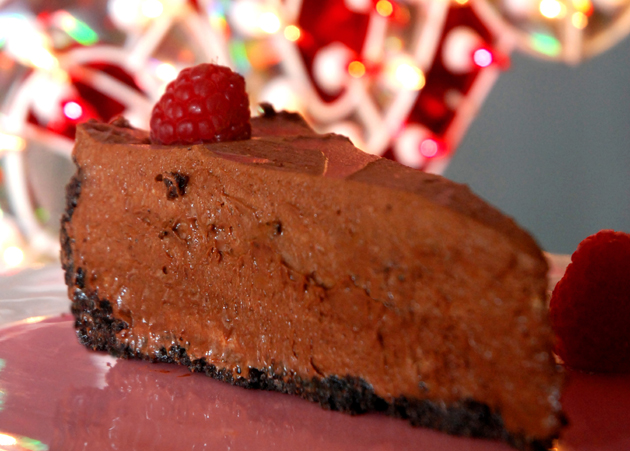
Decadent Chocolate Mousse Pie


When I was a kid, Oreos were my favorite cookies in the whole world. Today, they are the dark crunchy crust of my decadent chocolate mousse pie. It’s a bit more sophisticated but just as memorable. This deep, rich chocolate dessert is my Valentine to you.

As an eater, I’m not sure which gives more pleasure: licking the spoon after folding mounds of freshly whipped cream into liquid chocolate infused with espresso and Kahlúa, or just dipping Oreo cookies into an icy-cold glass of milk, then sucking them dry until the next dip. Chocolate love needs no real thought—it just is.


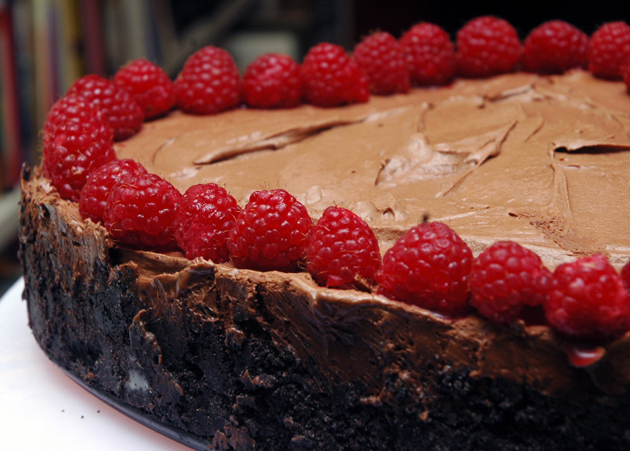
Decadent Chocolate Mousse Pie with Raspberries


This pie is a showstopper dessert—the “wow!” both at large gatherings and spoon-to-spoon, one-on-one with your special love. And it gets better—especially for you, the cook—because this pie is easy to assemble and can be conveniently made a day ahead.

To start, you’ll need a 10-inch round springform pan to mold and chill the pie. For Valentine’s Day, I used a special heart-shaped springform that I bought at a local kitchen store. These pans have side latches that make removing the pie in one piece fairly foolproof. After all, who wants all that chocolate love on the floor or in multiple pieces of ugly on the serving plate?

Think you’re too busy to try this? Time is on your side as the crust and mousse are ready in approximately 30 minutes. And while the recipe allows for a quick chill of four to six hours, mousse pie is best when chilled overnight. Now if you are new to cooking or never attempted a dessert like this, don’t be shy. Jump right in and refer to my illustrated, step-by-step cooking techniques and tips for help.

The ingredients are easy: double-chocolate Oreos (any style will work, as there is no wrong Oreo), semi-sweet chocolate chips, espresso powder, Kahlúa, butter, eggs and heavy cream—plus decorations of your choice. My personal Valentines get fresh raspberries, but you could pipe whipped cream on top, add shaved chocolate or colorful holiday candies or sprinkles.

On the day I removed my mousse pie from the refrigerator and outlined it with plump red raspberries, I couldn’t help humming a bit of Janis Joplin, “…come on, come on…take another little piece of my heart…it makes you feel good.”

Happy Valentine’s Day!


Refer to my illustrated, step-by-step cooking techniques and tips:

Make a Crumb Crust
Melt Chocolate
Grease and Flour a Cake Pan
Unmold Your Cake from a Springform Pan


Blissfully Basic: My Favorite Spaghetti Carbonara

Spaghetti Carbonara


Oh, how I love spaghetti carbonara twirled on to my fork, then lustily devoured and slurped while plucking crispy pieces of pancetta off the plate with my fingers. No napkins required. Besides being delicious, this pasta dish is the perfect embodiment of one of my favorite cooking principles: Simplicity rules!

Carbonara is an Italian classic that first appeared in the 1940s—exactly where is debated by food historians. My favorite theory has the Allied soldiers of World War II sharing their humble rations of powdered eggs and bacon with the local, hungry population of war-torn Italy. The Italians supplied dried pasta, and together they all prepared a dish that both nourished and gave them a sense of community. The soldiers became so fond of pasta carbonara that when they returned home to their respective countries, they introduced the dish to their families and local restaurants. These days you’ll find all kinds of spaghetti carbonara on restaurant menus; dressed up with cream and onions or speckled with peas. But traditional cooks—and I’m one of them—swear by five simple ingredients: pasta, cured meat, cheese, eggs and black pepper.

Alas, simplicity is often complicated with unnecessary snobbery as some cooks insist that only specific cured meats and cheeses merit the name carbonara. In Italy, particularly Rome, diners prefer their locally available guanciale and push it as the only true cured meat for carbonara. This very fatty, mild-tasting meat is made from unsmoked pig’s cheeks or jowls and must be cut in small, matchstick pieces to capture the striations of meat. While reasonably priced at six dollars a pound at my local Italian market, guanciale is often hard to find and requires an adventurous spirit.

My favorite is pancetta, an unsmoked, flavorful Italian bacon that adds tasty morsels of meat to the carbonara rather than crunchy pieces of fat. It runs around 16 dollars a pound—or eight bucks for this recipe—and is well worth the extra expense.

If you want to send food snobs wickedly over the edge, use readily available smoked slab bacon (that reminds one of bacon and eggs for breakfast). It costs around seven dollars a pound, or $3.50 for this dish. I don’t know about you, but if I get a hankering for carbonara and can’t have my favorite pancetta, I’ll fry up bacon in a heartbeat.

The cheese is fairly easy. Italians often prefer percorino romano; a salty sheep’s milk. Others—myself included—like parmesan-reggiano, the richly flavored, nutty tasting cow’s milk cheese from Parma, Italy. Try them both and then decide your favorite; you may even want to mix them up. Spaghetti is most common pasta used, but fettuccini, penne and rigatoni are also great choices.

Once you select your ingredients, there are a few tips you need for preparing out-of-this world pasta carbonara.

1. Start with perfectly cooked pasta. Cook it in ample water with a handful of salt. Master this cooking technique and your pasta will be restaurant quality.

2. Grate your cheese from larger pieces; do not waste your money on flavorless supermarket cheese in a shaker container.

3. Add the raw eggs to your hot pasta off the heat of the stove, or you risk scrambled eggs. Tasty but ugly.

4. Create a creamier sauce by adding a few tablespoons of the hot pasta cooking water. Don’t add too much water or your pasta will be swimming.

5. Fry the small pieces of meat slowly on a medium to medium-low flame to render them of their fat. You want the meat crispy, not charred—especially with guanciale.

6. Add several tablespoons of the rendered fat to the pasta—not all of it, as some meats release far too much fat to work well.

7. Keep to the five traditional ingredients: pasta, cured meat, cheese, eggs and black pepper. Less is more.

Perfetto!

Print a copy of my Spaghetti Carbonara and How To Cook Perfect Pasta for your convenience.

The Amazing, Erupting Volcano Cake

The Amazing Exploding Volcano Cake


It smokes, it gurgles and bubbles, then spews orange marshmallow lava over a dark chocolate mountain of cake. The crowd goes wild!

I made my first Amazing Erupting Volcano Cake several years ago when Chef Catherine Christiansen sent the recipes for her Beyond Wonderful baking column. At first glance they seemed complex, but with a bit of planning the cake was easy and came together quickly. This cake is all about fun so don’t get hung up on perfection. Embrace all its lumps, bumps and crumbs—they add character and keep you sane.

First pick a theme, then let your imagination soar. I’ve made this cake with dinosaurs, super heroes…


Star Wars on the Amazing Erupting Volcano Cake.


Star Wars characters and …


Zombies on the Amazing Erupting Volcano Cake
…zombies—lots of zombies slipping and sliding in  green slime.

You’ll find everything you need at cake supply, party and toy stores; from small bottles of brilliant red, orange and turquoise food coloring to plastic trees, edible rocks and a variety of characters, candles and costumes for added party fun.


Theme parties like Star Wars with the cake.


Who can resist Darth Vadar and a Jedi Master blowing up the Amazing Erupting Volcano cake?


Zombie face paint makes the exploding cake even more fun.

And with a little face paint and disgusting teeth, this birthday boy looks like he jumped off the zombie cake.

I bake the cakes and prepared the black chocolate and green buttercreams and the Kahlúa soaking syrup the day before assembly. Next day, I frost the cakes, made the sugar lava and lake and color the marshmallow lava. Assembly is a breeze and great fun. Once the Amazing Volcano stands before me in all its glory, I just can’t wait to blow it up! When it’s time, everyone gathers and holds their breath as I fuel the cake with cubes of dry ice, hot water, and warm lava. Then it starts—a little smoke—a few bubbles—lots of hoots and hollers—and over the side it goes. “That is so cool! I want that cake for my birthday.” “WOW!” Soon the group joins in a rousing chorus of Happy Birthday with intermittent giggles as the volcano continues its spectacular show.


Cutting the amazing erupting volcano cake.


As the lava…or oozing slime slows, everyone goes for the cake and just can’t believe how good it is. More than a few have a second piece, but my mind is always on the leftover chocolate frosting. No matter how delicious—and how spectacular—the cake, it’s hard to beat the thrill of pure buttercream, sneaked on the sly. Give me a spoon.


See more photos from the hilarious zombie birthday party on our Facebook page.


Get a printable copy of The Amazing Erupting Volcano Cake.


Mexican Tacos de Dorado


Tacos de Dorado—I loved eating them on the streets in Mexico (way too many if you must really know). When freshly fried, these are absolutely delicious and so addictive. Any over-indulgent guilt quickly disappears when you tell yourself how nutritious they are. (Try it, it really works!)

I especially loved the day that my friend Yolanda, a great Mexican cook, taught me how to make this super quick and easy vegetarian version. In less than 15 minutes one can fry a dozen corn tortillas slathered with refried beans, mashed potatoes or cheese to crispy perfection.

Once you’ve fried up the basics, the fun begins. Embellish the tacos with shredded lettuce and cheese, chopped tomatoes, onions and jalapeño peppers and sliced avocados. In my family, everyone creates their own favorite style. Some top theirs off with a dollop of sour cream while others go heavy on the spicy salsa. Bottled is popular at my house, although I often whip up the homemade kind when time permits.

One suggestion before you begin: make lots, make lots, make lots. These go very fast.

Frying the Tortillas

For the very best flavor, fry the tacos as close to possible before serving.

1. Pour oil into a spacious, heavy-bottomed skillet to a ½-inch depth. Heat it over a medium-high flame until 350-degrees—or sizzling.

2. Place several tablespoons of refried beans, mashed potatoes or shredded cheese on one side of the tortilla.

3. Fold the tortilla in half and hold it closed with your hand.

4. Place the bottom of the taco into the hot oil and hold in place for 12–15 seconds.

5. Turn to the side and cook until golden. Flip and fry the other side.

6. Remove from the oil with tongs or a large slotted spoon. Tip sideways and allow the excess oil to drain. Place on a clean working surface lined with paper towels. Blot.
Repeat the process until all 12 tacos are fried.

Fill the Tacos

1. Fill the tacos by carefully opening them and adding your favorite toppings.

2. Serve promptly.

Print a copy of Tacos de Dorado for your convenience.

 

All Fired Up: The Secret to Irresistible White Chile

White chili is filled with wonderful flavors and textures: beans, shredded chicken, chiles, onions, garlic, cumin…. So why does it so often end up as a boring dish that’s just hot and nothing else?

I took a look at my old family recipe that I had not made in years and immediately saw why it’s always been a poor second cousin to the fiery red chili I love. With a few simple cooking techniques learned from Mexican and Indian cuisines, I’ve finally made white wonderful.

The obvious: Give up the seemingly quick and easy, expensive canned and bottled ingredients for fresh. If your chili is flavorless, you’re wasting your time.

Beans. Many standard recipes call for several jars or cans of fully cooked white cannellini beans that cost two to three dollars each. Home cooked great northern beans are economical and your best choice for texture and flavor. When combined with the other ingredients, great northerns absorb all the flavors, giving you a tasty, tender bean rather than the overcooked, mushy results you get with canned.

Chicken. White chili recipes often require breast meat that can be bland when poached in water. Long, ago, I learned that dark, flavorful thighs are preferred in Indian curries because they absorb the onion, garlic and spices while imparting their chicken goodness to the gravy. I decided to use half thighs and half breasts for flavor and the white color.

Stock. I prefer homemade chicken stock for absolutely best flavor, but realize that many home cooks reach for canned convenience. Make it low sodium and you’ll be fine.

Onions, garlic and spices. Sauté everything in the chicken fat, rather than ordinary oil, for richer flavor. When it comes to dry spices, I depend on the Indian method of roasting the cumin and coriander in a cleared area of the pan for 30 seconds before mixing them into the mixture.

Chiles. No canned chiles for this dish unless you absolutely can’t find fresh, mild pasillas and anaheims, as well as the hotter and more common jalapenos. My secret is fire-roasting the chilies for a deep smoky flavor. While it’s great fun to do this in the ashes of a wood-burning fireplace (try it if you have one!), the simplest approach is to use a gas range. Just follow these easy steps:

  1. Place the chiles over a high flame, turning them as they blacken.
  2. Remove the blackened chiles from the flame and immediately cover them with a clean towel.
  3. Let them sweat for 10 minutes.
  4. Remove the towel and peel off the charred skin with a paring knife or your fingers. Remove excess pieces of skin with a paper towel.
  5. Make a slit in each chile and carefully remove the seeds.
  6. Rinse the chiles in cool water to remove any remaining skin bits or seeds.

One last tip:Chileshave different heat levels throughout the year. The same variety that blew out your eyeballs one week may be meek another. Check with your produce person and always taste and adjust as you cook.

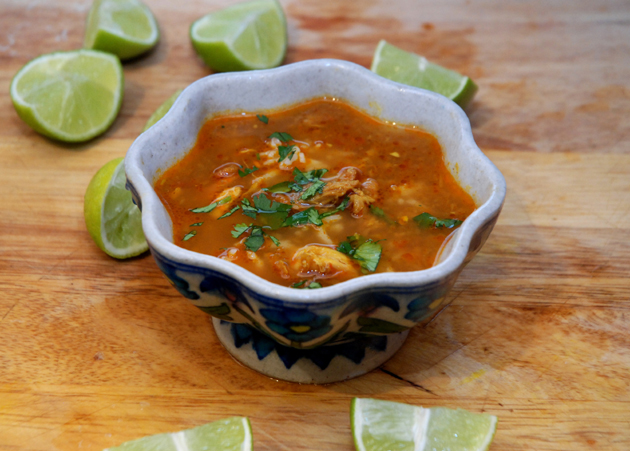
Now, this is a white chile you can be proud of. Ladle it in to bowls and top with chopped cilantro and lime wedges for spritzing. Add some hot, golden cornbread and life is good.

Print a copy of  White Chili  and How to Roast Chilies for your convenience.